
Sailing is more than moving a boat across the water. It can also represent freedom, courage, adventure, patience, and the journey through life. A sailboat faces changing winds, shifting waves, and unknown destinations. In many ways, people face similar challenges as they work toward their goals.
This is why sailing makes such a powerful subject for figurative language.
Writers often use sailing metaphors to describe life’s challenges, personal growth, relationships, leadership, and the search for success. For example, calling hope “a sail in a storm” suggests that hope can help someone move forward during difficult times. Describing a leader as “the captain of a changing sea” suggests that the leader must guide others through uncertainty.
These images turn abstract ideas into something readers can picture and understand.
In this guide, you will discover 75 creative metaphors for sailing, organized into useful categories. Each example includes its meaning, best use, and an original example sentence. You will also learn how sailing metaphors work, how they differ from similes, and how to create your own examples for essays, poems, stories, speeches, and blog posts.
Whether you are a student, teacher, poet, blogger, or creative writer, these sailing metaphors will help you make your writing more vivid and meaningful.
What Is a Metaphor for Sailing?
A metaphor for sailing describes one thing as another to show a meaningful connection between them. It does not simply explain how a boat moves across the water. Instead, it uses sailing as a way to express emotions, ideas, or experiences.
For example:
“Ambition is the wind beneath the canvas.”
This sentence compares ambition to the wind that fills a sail. Just as wind helps a sailboat move, ambition can give a person the drive to pursue a goal.
A simile expresses a similar idea differently:
“Ambition is like the wind beneath a sail.”
The simile uses the word “like,” while the metaphor makes a direct comparison.
Why Are Sailing Metaphors So Powerful?
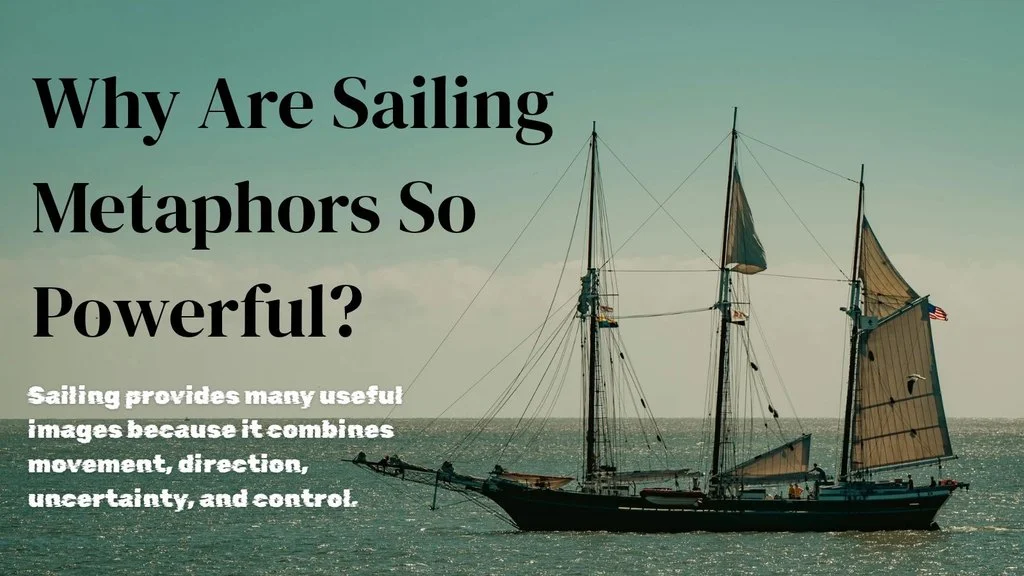
Sailing provides many useful images because it combines movement, direction, uncertainty, and control.
- The boat can represent a person, a team, or a life.
- The sail can represent hope, ambition, or motivation.
- The wind can represent opportunity, support, or outside influence.
- The waves can represent changes and challenges.
- The anchor can represent safety, stability, or something that holds a person back.
- The compass can represent values, wisdom, or direction.
- The harbor can represent comfort, rest, or a safe place.
- The horizon can represent the future, possibility, or an unfinished dream.
These meanings are not fixed rules. A writer can use an anchor as a symbol of security in one story and as a symbol of restriction in another. The surrounding words help readers understand the intended meaning.
75 Metaphors for Sailing With Meanings and Examples
The following examples explore sailing through eight themes: life, freedom, challenges, ambition, emotions, relationships, leadership, and poetic imagery.
1. Metaphors for Sailing and Life’s Journey
Sailing often represents life’s journey because both involve movement, changing conditions, decisions, and destinations that may not be fully known.
1. Life Is a Sailboat Chasing the Horizon
Meaning: Life is a journey toward future possibilities that continue to unfold.
Best use: Personal essays, reflective writing, and motivational speeches.
Example sentence: “Even after reaching her first goal, Nina saw life as a sailboat chasing the horizon, with new possibilities waiting beyond every achievement.”
2. Every Year Is a New Tide
Meaning: Each year brings changes, fresh chances, and different experiences.
Best use: Birthday messages, reflective essays, and stories about personal growth.
Example sentence: “He welcomed his new year as a new tide, ready to carry him toward experiences he had never imagined.”
3. The Heart Is a Sailboat on an Unknown Sea
Meaning: Feelings guide people through experiences whose outcomes they cannot predict.
Best use: Poetry, emotional stories, and writing about love or uncertainty.
Example sentence: “Her heart was a sailboat on an unknown sea, moving toward a future she could feel but could not yet explain.”
4. The Past Is a Wake Behind the Boat
Meaning: Past experiences leave traces, but they do not have to control the journey ahead.
Best use: Personal development articles and reflective writing.
Example sentence: “He accepted that the past was a wake behind the boat, visible in the water but unable to steer his future.”
5. The Future Is an Uncharted Coast
Meaning: The future contains places, opportunities, and challenges that remain unknown.
Best use: Graduation speeches, career essays, and stories about change.
Example sentence: “Starting university felt like approaching an uncharted coast, full of unfamiliar paths and exciting discoveries.”
6. Experience Is the Map Beneath the Sail
Meaning: Lessons from the past help people make better choices as they move forward.
Best use: Advice articles, memoirs, and educational writing.
Example sentence: “Every mistake became part of the map beneath his sail, helping him make wiser choices on the next journey.”
7. Time Is the Current Beneath the Keel
Meaning: Time continues to move life forward, even when progress is difficult to notice.
Best use: Poetry and reflections on change.
Example sentence: “While she waited for her plans to succeed, time remained the current beneath the keel, carrying each quiet day into the next.”
8. A Dream Is a Lighthouse Beyond the Mist
Meaning: A dream gives direction when the path toward it is unclear.
Best use: Inspirational speeches, school essays, and goal-setting content.
Example sentence: “Becoming a teacher was a lighthouse beyond the mist, guiding Omar through years of study and doubt.”
9. Memory Is a Harbor of Returning Boats
Meaning: Memories provide a place where past experiences can be revisited.
Best use: Poetry, family stories, and reflective essays.
Example sentence: “Her childhood home remained a harbor of returning boats, welcoming old memories whenever she visited.”
10. Growth Is a Voyage Beyond Familiar Waters
Meaning: Personal growth requires exploring new experiences and moving beyond what feels comfortable.
Best use: Personal development, education, and career writing.
Example sentence: “Learning to speak in public became a voyage beyond familiar waters, teaching him more about courage with every presentation.”
2. Metaphors for Sailing and Freedom
Sailing is often linked to freedom because a boat can move across wide waters toward places beyond the shore. These metaphors express independence, possibility, and the courage to choose your own direction.
11. Freedom Is a Sail Unfurling at Dawn
Meaning: Freedom represents the beginning of new choices and possibilities.
Best use: Poems, graduation messages, and inspirational writing.
Example sentence: “Leaving the job that no longer suited her felt like a sail unfurling at dawn, opening the way to a different life.”
12. Independence Is a Boat Without Borrowed Oars
Meaning: Independence means learning to rely on your own abilities and decisions.
Best use: Essays about maturity, self-reliance, and personal growth.
Example sentence: “After years of following other people’s plans, he built independence into a boat without borrowed oars.”
13. Possibility Is an Ocean Without Fences
Meaning: Possibility suggests that the future offers more choices than a person may first imagine.
Best use: Motivational speeches and creative writing.
Example sentence: “When the scholarship arrived, her world became an ocean without fences, filled with paths she had never considered.”
14. Courage Is a Sail Against the Wind
Meaning: Courage helps a person continue despite resistance or difficulty.
Best use: Inspirational essays and stories about overcoming fear.
Example sentence: “Speaking up for his classmates became a sail against the wind, demanding courage when the room turned against him.”
15. Curiosity Is a Sail That Never Sleeps
Meaning: Curiosity keeps a person exploring and asking questions.
Best use: Education, science writing, and children’s stories.
Example sentence: “Her curiosity was a sail that never slept, pushing her to discover how the world worked.”
16. Opportunity Is an Open Strait
Meaning: An opportunity creates a possible route toward a goal.
Best use: Career guidance, business writing, and motivational content.
Example sentence: “The internship became an open strait between his classroom lessons and the career he hoped to build.”
17. Imagination Is a Wind Beyond the Shore
Meaning: Imagination allows people to explore ideas beyond their present surroundings.
Best use: Poetry, fiction, and creative writing.
Example sentence: “Her imagination was a wind beyond the shore, carrying each ordinary observation toward an extraordinary story.”
18. Adventure Is a Sailboat Leaving Its Moorings
Meaning: Adventure begins when someone leaves familiar surroundings to explore something new.
Best use: Travel blogs, stories, and inspirational writing.
Example sentence: “Their first trip abroad was a sailboat leaving its moorings, beginning a journey filled with unfamiliar sights and experiences.”
19. Choice Is the Helm of Freedom
Meaning: Freedom includes the ability to direct your own actions and decisions.
Best use: Essays about independence, responsibility, and personal values.
Example sentence: “She understood that choice was the helm of freedom, but every turn also brought responsibility for the direction she took.”
20. A New Beginning Is a Fresh Wind Across the Water
Meaning: A new beginning brings energy and the chance to move forward differently.
Best use: Graduation cards, personal essays, and stories about change.
Example sentence: “After moving to a new city, he felt a fresh wind across the water, giving him the courage to start again.”
3. Metaphors for Sailing Through Challenges
Sailing is not always peaceful. Rough seas, changing winds, and poor visibility can make progress difficult. These images help writers describe resilience and the effort required to overcome obstacles.
21. Hope Is a Sail in a Storm
Meaning: Hope helps people keep moving during difficult times.
Best use: Inspirational writing, personal stories, and poems.
Example sentence: “When the family faced a difficult year, hope became a sail in a storm, helping them take one day at a time.”
22. Fear Is a Fog Over the Bow
Meaning: Fear makes the future harder to see and can hide possible choices.
Best use: Stories about anxiety, courage, and decision-making.
Example sentence: “His fear was a fog over the bow, hiding the opportunities that waited beyond the first step.”
23. Failure Is a Hidden Reef
Meaning: Failure can be a danger that teaches people to pay closer attention to their decisions.
Best use: Business articles, educational writing, and stories about learning from mistakes.
Example sentence: “The failed launch was a hidden reef that taught the team to test its ideas before moving ahead.”
24. Resilience Is a Hull That Holds Against the Waves
Meaning: Resilience helps a person withstand pressure without giving up.
Best use: Motivational essays, leadership content, and personal narratives.
Example sentence: “Years of practice had built a hull that held against the waves, allowing the young athlete to recover after setbacks.”
25. Patience Is a Sail Waiting for Wind
Meaning: Patience means accepting that progress sometimes depends on timing.
Best use: Reflective writing and advice about long-term goals.
Example sentence: “Rather than rushing the decision, she practiced patience like a sail waiting for wind.”
26. Doubt Is a Leak Beneath the Deck
Meaning: Unchecked doubt can slowly weaken confidence and progress.
Best use: Stories about self-confidence and personal struggles.
Example sentence: “Each harsh comment became another leak beneath the deck until he learned to trust his preparation.”
27. Stress Is a Gale Across the Mast
Meaning: Stress places pressure on a person’s ability to remain steady.
Best use: General wellness writing, workplace articles, and personal essays.
Example sentence: “During exam week, stress became a gale across the mast, forcing Leah to simplify her schedule and protect her sleep.”
28. Perseverance Is a Sail Repaired at Sea
Meaning: Perseverance means continuing toward a goal while making changes and fixing problems along the way.
Best use: Motivational writing and stories about recovery or achievement.
Example sentence: “His perseverance was a sail repaired at sea, allowing him to continue his studies even after losing his first scholarship.”
29. A Setback Is a Sudden Shift in the Wind
Meaning: A setback changes the direction or pace of progress, requiring a new response.
Best use: Career advice, personal essays, and educational writing.
Example sentence: “Losing the client was a sudden shift in the wind, so the business changed its plan instead of abandoning its goal.”
30. Wisdom Is a Safe Passage Between Rocks
Meaning: Wisdom helps people avoid unnecessary danger while moving toward a goal.
Best use: Leadership writing, decision-making guides, and reflective essays.
Example sentence: “Her wisdom became a safe passage between rocks, helping the team avoid quick decisions that could cause lasting harm.”
4. Metaphors for Sailing and Ambition
Ambition is the desire to achieve something meaningful. Sailing metaphors can show how motivation, direction, and effort help people pursue their goals.
31. Ambition Is the Wind Beneath the Canvas
Meaning: Ambition provides energy for pursuing goals.
Best use: Career articles, motivational speeches, and student essays.
Example sentence: “Her ambition was the wind beneath the canvas, carrying her through years of training toward a career in medicine.”
32. Goals Are Islands on the Open Sea
Meaning: Goals are destinations that give a journey direction and purpose.
Best use: Goal-setting articles and personal development content.
Example sentence: “He treated his goals as islands on the open sea, planning one reachable destination at a time.”
33. Discipline Is the Rigging of Achievement
Meaning: Discipline provides the structure that helps effort become progress.
Best use: Productivity writing, school essays, and motivational content.
Example sentence: “Daily practice was the rigging of achievement, keeping her efforts organized as she prepared for the competition.”
34. Success Is a Harbor Built by Small Voyages
Meaning: Success grows through repeated efforts and smaller achievements.
Best use: Business writing, education, and personal development.
Example sentence: “He realized that success was a harbor built by small voyages, each completed project adding to his experience.”
35. Focus Is a Compass Pointing Through Spray
Meaning: Focus helps people maintain direction despite distractions and uncertainty.
Best use: Study guides, productivity articles, and professional development.
Example sentence: “Her focus was a compass pointing through spray, keeping her attention on the final exam despite the noise around her.”
36. Practice Is the Daily Trimming of Sails
Meaning: Practice involves making small adjustments that improve performance over time.
Best use: Sports writing, education, and skill development.
Example sentence: “Learning the piano was the daily trimming of sails, with every lesson helping him improve his timing and control.”
37. Achievement Is a Flag Raised at the Mast
Meaning: Achievement is a visible sign of reaching an important milestone.
Best use: Graduation speeches, award ceremonies, and personal stories.
Example sentence: “Completing her first novel was a flag raised at the mast, marking years of patient work.”
38. Talent Is a Sail Waiting for Wind
Meaning: Talent needs opportunity, effort, and direction to become useful.
Best use: Educational writing and motivational speeches.
Example sentence: “His talent was a sail waiting for wind, and the new coach gave him the chance to develop it.”
39. Opportunity Is a Favorable Current
Meaning: Opportunity can help move someone toward a goal with less resistance.
Best use: Career guidance, business writing, and reflective essays.
Example sentence: “The mentoring program became a favorable current, helping her turn a strong idea into a workable business plan.”
40. Ambition Without Planning Is a Sail Without a Rudder
Meaning: Ambition needs direction and sound decisions to produce useful results.
Best use: Leadership articles, student essays, and goal-setting guides.
Example sentence: “He learned that ambition without planning was a sail without a rudder, full of energy but unable to follow a clear course.”
5. Metaphors for Sailing and Emotions
Sailing imagery can describe feelings that change with experience. Calm water may suggest peace, while a storm can represent emotional struggle. These images are especially useful in poetry and reflective writing.
41. Joy Is Sunlight Filling the Sails
Meaning: Joy provides energy and makes progress feel easier.
Best use: Celebratory messages, poems, and personal stories.
Example sentence: “Seeing her family at the finish line was sunlight filling the sails, giving her a final burst of energy.”
42. Sadness Is a Gray Sea at Dusk
Meaning: Sadness can make the world feel quiet, heavy, and uncertain.
Best use: Poetry, reflective essays, and emotional fiction.
Example sentence: “After saying goodbye to his closest friend, the city became a gray sea at dusk.”
43. Anger Is a Squall Above the Deck
Meaning: Anger can arrive suddenly and disturb clear thinking.
Best use: Stories about conflict, emotional growth, and self-control.
Example sentence: “His anger was a squall above the deck, and he stepped away before the argument grew worse.”
44. Peace Is a Harbor After Heavy Weather
Meaning: Peace feels like safety and relief after a difficult period.
Best use: Personal essays, poetry, and inspirational writing.
Example sentence: “After the long dispute ended, their quiet conversation felt like a harbor after heavy weather.”
45. Love Is a Sail Shared by Two Hands
Meaning: Love involves cooperation, trust, and shared effort.
Best use: Romantic poetry, relationship articles, and personal messages.
Example sentence: “Their love was a sail shared by two hands, with each partner helping guide their future.”
46. Loneliness Is a Boat Without a Wake
Meaning: Loneliness can feel like moving through life without leaving a visible connection to others.
Best use: Poetry, short stories, and reflective writing.
Example sentence: “In the crowded city, he felt like a boat without a wake, moving through busy streets without feeling known.”
47. Courage Is a Hand Steady on the Helm
Meaning: Courage helps a person continue making thoughtful choices during fear or uncertainty.
Best use: Inspirational stories and writing about personal growth.
Example sentence: “Her courage was a hand steady on the helm as she spoke honestly about the mistake.”
48. Worry Is a Sea That Never Rests
Meaning: Worry can create a constant flow of troubling thoughts.
Best use: Reflective essays and fictional descriptions of anxiety.
Example sentence: “Before the interview, worry became a sea that never rested, filling his mind with one possible problem after another.”
49. Gratitude Is a Warm Light in the Cabin
Meaning: Gratitude brings comfort and helps people notice what they value.
Best use: Journaling prompts, inspirational content, and personal essays.
Example sentence: “Even during their financial struggles, gratitude was a warm light in the cabin, reminding them of the people who stood beside them.”
50. Confidence Is a Sail That Catches the Wind
Meaning: Confidence helps a person use opportunities and move forward with purpose.
Best use: Motivational writing, career articles, and stories about self-belief.
Example sentence: “After months of practice, confidence became a sail that caught the wind when she finally presented her work.”
6. Metaphors for Sailing, Relationships, and Connection
Relationships can resemble sailing because people must share direction, respond to change, and work together when conditions become difficult.
51. Friendship Is a Boat With Two Strong Oars
Meaning: Friendship grows when both people contribute care and effort.
Best use: Friendship essays, greeting cards, and personal writing.
Example sentence: “Their friendship was a boat with two strong oars, carrying them through different stages of life.”
52. Trust Is an Anchor in Shared Waters
Meaning: Trust provides stability when a relationship faces uncertainty.
Best use: Relationship advice, family stories, and reflective writing.
Example sentence: “Even when they disagreed, trust remained an anchor in their shared waters.”
53. Communication Is a Signal Across the Waves
Meaning: Communication helps people understand one another despite distance or confusion.
Best use: Teamwork guides, relationship articles, and workplace writing.
Example sentence: “Their honest messages became a signal across the waves, helping them solve the misunderstanding before it grew.”
54. Compromise Is a Sail Adjusted by Two Captains
Meaning: Compromise requires people to adapt their plans to accommodate each other’s needs.
Best use: Conflict resolution and relationship writing.
Example sentence: “Planning their future became a sail adjusted by two captains, with each partner making room for the other’s priorities.”
55. Family Is a Harbor With Many Moorings
Meaning: Family can provide several sources of support and belonging.
Best use: Family essays, poems, and celebratory messages.
Example sentence: “Her family was a harbor with many moorings, offering different forms of comfort whenever life became difficult.”
56. Loyalty Is a Rope Between Two Boats
Meaning: Loyalty maintains a connection between people even when circumstances pull them in different directions.
Best use: Friendship stories and personal essays.
Example sentence: “Their loyalty was a rope between two boats, keeping their friendship connected through years of distance.”
57. Respect Is the Distance Between Safe Ships
Meaning: Healthy relationships need both closeness and room for personal boundaries.
Best use: Relationship guides and essays about mutual respect.
Example sentence: “They learned that respect was the distance between safe ships, allowing each person to grow without losing their connection.”
58. Shared Goals Are a Common Horizon
Meaning: People cooperate more easily when they are working toward a goal they both value.
Best use: Teamwork articles, partnerships, and family writing.
Example sentence: “The volunteers found a common horizon in their plan to restore the neighborhood park.”
59. Forgiveness Is a Knot Loosened at Sea
Meaning: Forgiveness releases some of the tension that keeps a relationship trapped in past conflict.
Best use: Personal essays, stories about reconciliation, and poetry.
Example sentence: “Her apology loosened a knot at sea, giving the sisters a chance to rebuild their relationship.”
60. Support Is a Towline Through Rough Water
Meaning: Support helps someone continue when personal resources are not enough.
Best use: Motivational content and stories about friendship or recovery.
Example sentence: “During his first year away from home, his friends became a towline through rough water, helping him adjust to unfamiliar challenges.”
7. Metaphors for Sailing and Leadership
Sailing provides useful images for leadership because a captain must guide a vessel, understand changing conditions, and help the crew work toward a destination.
61. A Leader Is the Captain of a Changing Sea
Meaning: A leader guides people through changing conditions and uncertain outcomes.
Best use: Leadership articles, speeches, and business writing.
Example sentence: “During the company merger, Elena became the captain of a changing sea, keeping the team informed while adjusting the plan.”
62. A Vision Is the North Star of a Crew
Meaning: A clear vision gives a group a shared direction.
Best use: Business articles, school leadership, and team presentations.
Example sentence: “The project’s vision became the North Star of the crew, helping everyone understand why their daily tasks mattered.”
63. Teamwork Is a Fleet Moving With One Purpose
Meaning: A team works effectively when its members coordinate their efforts toward a shared goal.
Best use: Teamwork essays, workplace training, and motivational speeches.
Example sentence: “The volunteers became a fleet moving with one purpose, each group completing a different part of the cleanup.”
64. Experience Is the Captain’s Logbook
Meaning: Experience records lessons that can guide future decisions.
Best use: Leadership writing, mentoring, and professional development.
Example sentence: “Every completed project became a page in her captain’s logbook, helping her recognize problems before they returned.”
65. Planning Is the Chart Before Departure
Meaning: Planning provides a route and helps people prepare for possible challenges.
Best use: Project management, education, and business writing.
Example sentence: “Before launching the campaign, the team treated its plan as the chart before departure, checking the budget, timeline, and risks.”
66. Good Communication Is the Bell Across the Deck
Meaning: Clear communication helps everyone understand what is happening and what they need to do.
Best use: Team management, workplace writing, and school projects.
Example sentence: “The morning briefing became the bell across the deck, making sure every team member understood the day’s priorities.”
67. Accountability Is the Rudder of a Crew
Meaning: Accountability helps people stay responsible for their roles and decisions.
Best use: Leadership articles, teamwork guides, and management training.
Example sentence: “Shared accountability became the rudder of the crew, keeping the project on course when deadlines grew tight.”
68. A Strong Team Is a Well-Rigged Vessel
Meaning: A strong team has the skills, roles, and systems needed to work effectively.
Best use: Business writing, sports leadership, and teamwork content.
Example sentence: “Clear roles and regular feedback turned the department into a well-rigged vessel ready for a demanding launch.”
69. Change Is a Shift in the Wind
Meaning: Change can alter a group’s direction and require a new approach.
Best use: Change management, business articles, and organizational writing.
Example sentence: “The new regulations were a shift in the wind, so the company adjusted its plans while keeping its main goal.”
70. Mentorship Is a Beacon Beside the Channel
Meaning: A mentor offers guidance that helps someone navigate unfamiliar situations.
Best use: Career development, education, and inspirational writing.
Example sentence: “Her former teacher became a beacon beside the channel, helping her navigate the first difficult year of her career.”
8. Short and Creative Metaphors for Sailing
Short sailing metaphors are useful for captions, titles, poems, and motivational messages. They create a clear image with only a few words.
71. Hope Is a Golden Sail
Meaning: Hope brings warmth and motivation to a difficult journey.
Best use: Inspirational captions and poetry.
Example sentence: “Even on the hardest days, hope remained a golden sail above his plans.”
72. Wisdom Is a Sea Compass
Meaning: Wisdom helps people choose a direction when the path is unclear.
Best use: Short essays, motivational messages, and reflective writing.
Example sentence: “She carried wisdom as a sea compass, using past lessons to guide new decisions.”
73. Dreams Are Boats of Tomorrow
Meaning: Dreams carry ideas and hopes toward a possible future.
Best use: Poems, school speeches, and creative captions.
Example sentence: “The drawings in his notebook were boats of tomorrow, each one carrying an idea he hoped to build.”
74. Patience Is a Quiet Anchorage
Meaning: Patience offers a steady place to wait without rushing the process.
Best use: Poetry, reflective writing, and motivational content.
Example sentence: “During the long application process, patience became her quiet anchorage.”
75. Courage Is an Unfurled Sail
Meaning: Courage means being ready to move forward despite uncertainty.
Best use: Speeches, personal essays, and short inspirational captions.
Example sentence: “His decision to begin again was an unfurled sail, catching the first wind of a new opportunity.”
How to Choose the Best Sailing Metaphor
The best sailing metaphor depends on the message you want to communicate. A metaphor about a storm creates a different feeling from one about a quiet harbor.
Use this table to select a suitable image.
| Your message | Sailing metaphor | Main idea |
|---|---|---|
| Life and personal growth | An uncharted coast | Exploring the unknown |
| Freedom | A sail unfurling at dawn | New choices and possibilities |
| Resilience | A hull holding against waves | Strength during difficulty |
| Ambition | Wind beneath the canvas | Motivation and progress |
| Emotional peace | A harbor after heavy weather | Relief and safety |
| Friendship | A boat with two strong oars | Shared effort |
| Leadership | A captain of a changing sea | Guidance through uncertainty |
| Planning | A chart before departure | Preparation and direction |
| Wisdom | A sea compass | Thoughtful choices |
| Patience | A quiet anchorage | Waiting without rushing |
Match the Metaphor to Your Tone
For an inspiring tone: Choose images of open water, sunrise, sails, and distant horizons.
Example: “Every new challenge is a fresh wind across the water.”
For a serious tone: Use storms, hidden reefs, damaged sails, or narrow channels.
Example: “Unchecked pride was a hidden reef beneath the team’s success.”
For a peaceful tone: Choose harbors, calm water, quiet cabins, and gentle tides.
Example: “Her evening routine was a quiet harbor after a crowded day.”
For a romantic tone: Use shared sails, paired boats, and common horizons.
Example: “Their future was a common horizon that neither wanted to reach alone.”
How to Create Your Own Sailing Metaphors
You do not need to be an experienced sailor to write an effective sailing metaphor. Start with a clear idea, then connect it to something that happens on a boat.
Step 1: Choose the Idea You Want to Explain
Decide whether you want to describe courage, hope, freedom, ambition, leadership, or another concept.
For example, you might want to explain how a student continues working toward a goal after receiving a poor grade.
Step 2: Choose a Sailing Image
Think about the parts of a sailboat and their possible meanings.
- A sail catches the wind.
- A rudder helps direct the boat.
- An anchor holds a boat in place.
- A compass provides direction.
- A storm creates difficult conditions.
- A harbor offers shelter.
- A chart helps a sailor plan a route.
Choose the image that best fits your idea.
Step 3: Find the Connection
Ask what the idea and the sailing image have in common.
A rudder guides a boat. A clear goal can guide a person’s actions.
This connection gives you a starting point for a metaphor.
Step 4: Write a Direct Comparison
Turn the connection into a sentence.
Basic idea: A student stays focused despite distractions.
Metaphor: “Focus is the rudder of achievement.”
The image suggests that focus helps direct effort toward a goal.
Step 5: Add a Real Situation
Make the metaphor more meaningful by using it in context.
“Focus was the rudder of achievement, helping Sara complete her project while messages and social media competed for her attention.”
The reader can now see how the metaphor connects to an everyday experience.
Step 6: Keep the Image Consistent
If your metaphor describes focus as a rudder, develop the idea through direction, steering, and staying on course. Avoid suddenly mixing in unrelated images such as engines, gardens, and musical instruments.
A consistent image makes your writing easier to picture.
Step 7: Check Whether the Metaphor Adds Value
Ask yourself:
- Does the metaphor explain the idea clearly?
- Does it create a useful image?
- Is it suitable for the reader?
- Does the sentence sound natural?
- Could a more direct sentence work better?
Not every sentence needs a metaphor. Use figurative language when it makes an idea clearer, more emotional, or more memorable.
Metaphor vs. Simile vs. Analogy: Sailing Examples
These three literary devices can all explain sailing-related ideas, but they serve different purposes.
| Literary device | Definition | Sailing example |
|---|---|---|
| Metaphor | Direct comparison between different things | “Hope is a sail in a storm.” |
| Simile | Comparison using “like” or “as” | “Hope is like a sail in a storm.” |
| Analogy | An extended comparison that explains a relationship | “Hope helps people face hardship just as a sail helps a boat move through difficult weather.” |
| Personification | Giving human qualities to something nonhuman | “The wind whispered directions to the boat.” |
| Symbolism | Using an image to represent a broader idea | A lighthouse represents guidance or hope. |
A metaphor creates a direct image. A simile makes the comparison more explicit. An analogy develops the connection to explain how two things work in similar ways.
Common Mistakes When Using Sailing Metaphors
1. Mixing Unrelated Images
Consider this sentence:
“Ambition is a sail, a mountain, and a fire engine racing through the garden of success.”
The images compete with one another, making the meaning hard to follow.
Better approach: Keep one main image.
“Ambition is a sail that catches the wind of opportunity.”
2. Using a Metaphor That Does Not Match the Message
An anchor may represent stability, but it can also suggest being held back. If you want to describe fast progress, an anchor may not be the right image.
Better approach: Choose the image based on the meaning you want readers to understand.
3. Using Only Familiar Expressions
Phrases such as “smooth sailing” and “weathering the storm” are common expressions. They can still work, but they may not feel fresh in creative writing.
Better approach: Add a specific detail or create a new connection.
Instead of “It was smooth sailing,” try “The project became a quiet crossing after months of changing winds.”
4. Overloading the Sentence With Figurative Language
Too many metaphors can make a simple point confusing.
Better approach: Use one strong image, then explain the idea in plain language.
5. Forgetting the Reader
Highly technical sailing terms may confuse readers who do not know much about boats.
Better approach: Use familiar images such as sails, waves, storms, and harbors, or explain unfamiliar terms when they matter.
6. Treating Every Sailing Image as Positive
Sailing imagery can express danger, uncertainty, isolation, or failure as well as freedom and hope.
Better approach: Choose the emotional meaning that matches the subject. A damaged sail might describe a difficult setback, while a harbor might represent safety.
Practical Uses of Sailing Metaphors
In School Essays
Sailing metaphors can help explain personal growth, ambition, and challenges.
Example: “Education is a voyage beyond familiar waters, teaching students how to navigate new ideas.”
Follow the metaphor with clear reasons or examples that support your point.
In Poetry
Sailing offers images of movement, sound, weather, and distance.
Example:
“The wind unfolded dreams of blue,
And pulled the waiting vessel through.”
These lines use a sailboat’s movement to suggest that dreams can encourage someone to keep going.
In Motivational Speeches
A sailing metaphor can give an audience a clear message about effort and direction.
Example: “A dream is not a harbor where we wait forever. It is a compass that helps us choose where to sail next.”
Explain the metaphor through a real example so the audience understands how to apply the idea.
In Business and Leadership Writing
Sailing metaphors can explain planning, teamwork, and adapting to change.
Example: “A strong team is a well-rigged vessel, with every role helping the whole group move forward.”
The image works best when followed by practical advice about communication, responsibility, and shared goals.
In Travel Blogs
Sailing can represent discovery and the excitement of visiting new places.
Example: “Each unfamiliar town was an uncharted coast, offering a new view of the world.”
Use this type of metaphor to introduce a travel experience, then add specific details about the place.
In Social Media Captions
Short sailing metaphors can make captions more memorable.
- “Let hope fill your sails.”
- “Every horizon holds a new question.”
- “Courage is an unfurled sail.”
- “Find your compass. Choose your course.”
- “Some storms teach you how to steer.”
- “A new beginning is a fresh wind.”
- “Dreams are boats of tomorrow.”
Choose a caption that fits the mood and purpose of your post.
FAQs:
What is a good metaphor for sailing?
“Life is a sailboat chasing the horizon” is a good metaphor for sailing because it connects sailing with personal growth, uncertainty, and future possibilities. For a motivational message, “ambition is the wind beneath the canvas” expresses the drive to achieve a goal.
What does sailing symbolize in literature?
Sailing can symbolize freedom, adventure, personal growth, risk, independence, and the search for purpose. The meaning depends on the story. A calm voyage might represent peace, while a stormy crossing could represent conflict or a difficult period in life.
What is a metaphor for sailing through difficult times?
“Hope is a sail in a storm” is a useful metaphor for facing hardship. It suggests that hope helps people keep moving when circumstances become difficult. Other choices include “resilience is a hull that holds against the waves” and “wisdom is a safe passage between rocks.”
What is a metaphor for life’s journey?
“Life is a sailboat chasing the horizon” represents the ongoing search for new experiences and goals. Another option is “the future is an uncharted coast,” which suggests that life contains opportunities and challenges we cannot fully predict.
What do sails represent in metaphors?
Sails often represent ambition, hope, motivation, freedom, or the ability to move forward. A full sail may suggest energy and progress, while a damaged sail may suggest a setback or a loss of direction.
What does an anchor symbolize in a sailing metaphor?
An anchor often represents stability, safety, loyalty, or something that keeps a person grounded. In a different context, it can represent a burden or restriction that prevents progress. The surrounding sentence determines which meaning is strongest.
What does the wind represent in sailing metaphors?
Wind can represent opportunity, motivation, change, or outside forces that influence a person’s direction. A favorable wind may suggest support or good timing, while a strong opposing wind can represent resistance.
What is the difference between a sailing metaphor and a sailing simile?
A sailing metaphor makes a direct comparison, such as “Hope is a sail in a storm.” A sailing simile uses “like” or “as,” such as “Hope is like a sail in a storm.” Both can create vivid images, but they use different forms of comparison.
How can I use sailing metaphors in an essay?
Choose a metaphor that supports your main idea, explain its meaning, and connect it to a real example. If your essay is about resilience, you might describe resilience as a hull that holds against the waves, then explain how preparation and support help people recover from setbacks.
Are sailing metaphors always positive?
No. Sailing metaphors can express hope and freedom, but they can also describe confusion, danger, fear, or failure. For example, “fear is a fog over the bow” presents fear as something that hides the way forward.
What is a short metaphor for sailing?
Examples include “hope is a golden sail,” “wisdom is a sea compass,” “dreams are boats of tomorrow,” and “courage is an unfurled sail.” Each expresses a different idea in a short, memorable form.
How do I create an original metaphor about sailing?
Start with an idea, such as courage or patience. Choose a sailing image that shares a similar quality, then connect them directly. For example, you might describe patience as “a sail waiting for wind” because both involve being ready while allowing time for the right conditions.
Conclusion:
Metaphors for sailing help writers express ideas about life, freedom, courage, ambition, emotions, relationships, and leadership. A sail can represent motivation, a compass can represent wisdom, and a harbor can suggest safety after a difficult journey.
The best metaphor depends on the message you want to share. Use open water and distant horizons to express possibility. Use storms and hidden reefs to describe challenges. Use shared boats and common horizons to explore teamwork and relationships.
Most importantly, remember that sailing metaphors are tools for making meaning clearer. A familiar image can help a reader understand an abstract idea, while an original comparison can make that idea memorable.
Choose one strong image, connect it to a real experience, and let the meaning develop naturally. With practice, you can use sailing metaphors to make essays more engaging, poems more vivid, and stories more powerful.

I am Naqash Ayub, the content creator behind Spellyeah, where I simplify word meanings, language concepts, and useful information into easy-to-read guides. My goal is to help readers learn with clear, accurate, and reliable content that makes understanding English simple and enjoyable.